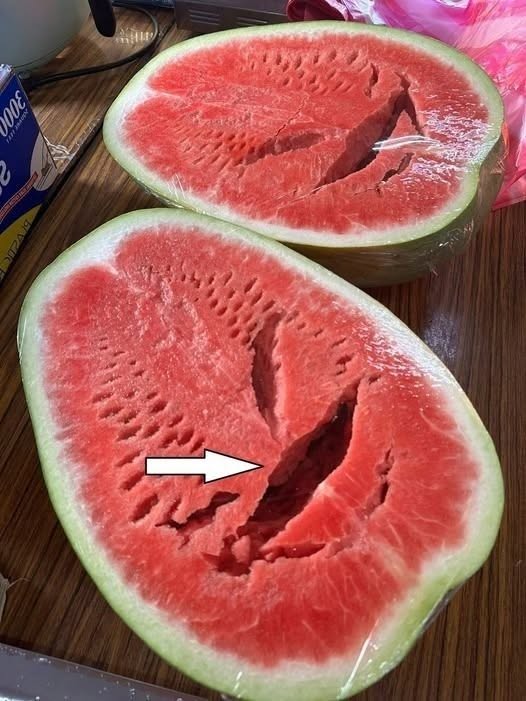
Many online posts claim that internal cracks automatically indicate the use of growth hormones or harmful chemicals.
However, agricultural specialists note that hollow heart can occur naturally and is commonly linked to pollination and growth conditions rather than chemical contamination alone.
The presence of cracks by itself does not prove that a watermelon was treated with unsafe substances.
Is a Cracked Watermelon Safe to Eat?
In many cases, a watermelon with internal cracks is still safe to consume if:
- The flesh smells fresh
- There are no signs of mold
- The texture remains firm
- The fruit has been stored properly
- There are no unusual colors or signs of spoilage
The cracks may affect texture and appearance, but not necessarily safety.
When Should You Throw It Away?
Regardless of whether cracks are present, discard a watermelon if you notice:
- Sour or unpleasant odors
- Slimy texture
- Visible mold
- Fermented taste
- Dark, discolored areas
- Signs of decay
These are more reliable indicators that the fruit has spoiled.
Health Benefits of Watermelon
Watermelon remains one of the most nutritious fruits available.
It contains:
- Approximately 90% water
- Vitamin C
- Vitamin A
- Potassium
- Antioxidants
- Lycopene