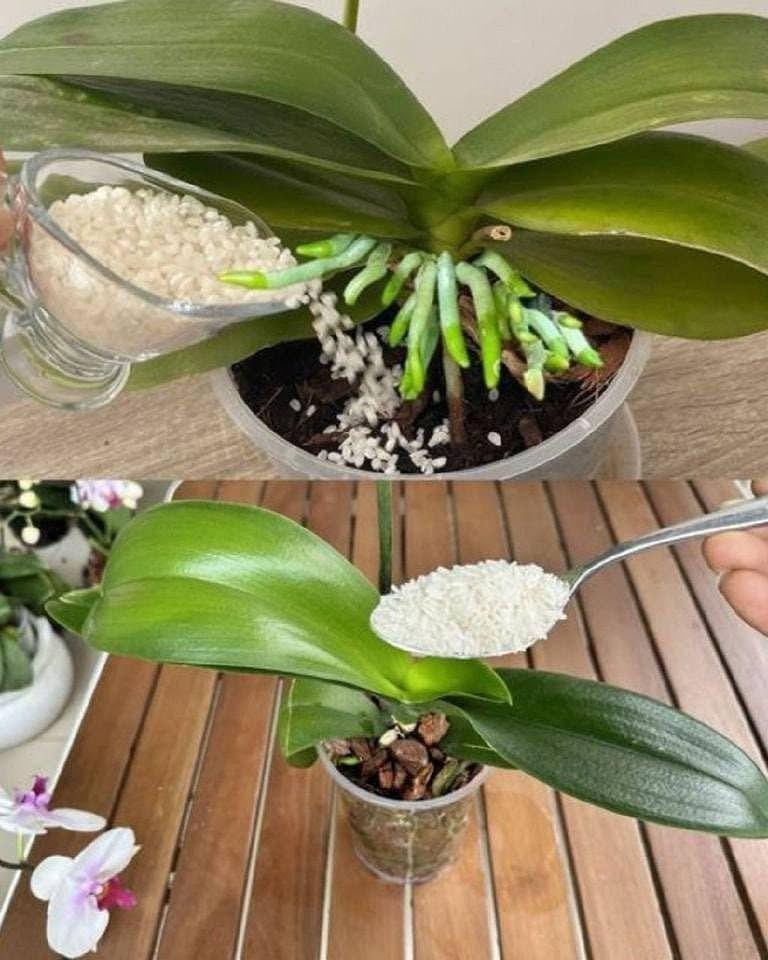
Orchids are among the most beautiful and elegant flowering plants in the world. Their stunning blooms can last for weeks or even months, making them a favorite among indoor plant enthusiasts. Yet many orchid owners struggle with a common problem: after the flowers fade, the plant seems healthy but refuses to bloom again.
If you've ever wondered how some gardeners manage to keep their orchids producing lush roots, vibrant leaves, and abundant flowers year after year, you're not alone. Social media is filled with tips, tricks, and home remedies promising miraculous results. One of the most popular involves a common kitchen staple—rice.
But does it really work? And what do orchids actually need to thrive?
Understanding What Orchids Need
Before discussing homemade plant remedies, it's important to understand the unique needs of orchids.
Unlike many houseplants, orchids naturally grow attached to trees in tropical environments. Their roots are designed to absorb moisture and nutrients from the air rather than from dense soil.
Healthy orchids require:
- Bright, indirect sunlight
- Good air circulation
- Proper drainage
- Moderate humidity
- Occasional feeding
- Consistent watering habits
When these conditions are met, orchids often reward growers with spectacular blooms.
Why Orchid Roots Matter
Many beginners focus entirely on flowers, but experienced growers pay close attention to the roots.
Healthy orchid roots are typically:
- Firm and plump
- Green when moist
- Silvery when dry
- Free from rot and mushiness
Strong roots allow the plant to absorb water and nutrients efficiently, providing the energy needed for future flower spikes.
The Popular Rice Water Trend
One of the most widely shared orchid-growing tips involves rice water.
Rice water is the liquid left behind after rinsing or soaking rice. Some gardeners believe it may provide small amounts of nutrients that support plant growth.
Potential nutrients found in rice water can include:
- Trace minerals
- Small amounts of starch
- Certain vitamins
Many plant enthusiasts use diluted rice water occasionally as part of their plant-care routine.
Can Rice Water Make Orchids Bloom?
While rice water may contain trace nutrients, there is limited scientific evidence showing that it alone causes orchids to produce more flowers.
Successful blooming typically depends on several factors working together:
Proper Light
Insufficient light is one of the most common reasons orchids fail to bloom.
Temperature Changes
Many orchids need a slight drop in nighttime temperatures to trigger flower spike development.