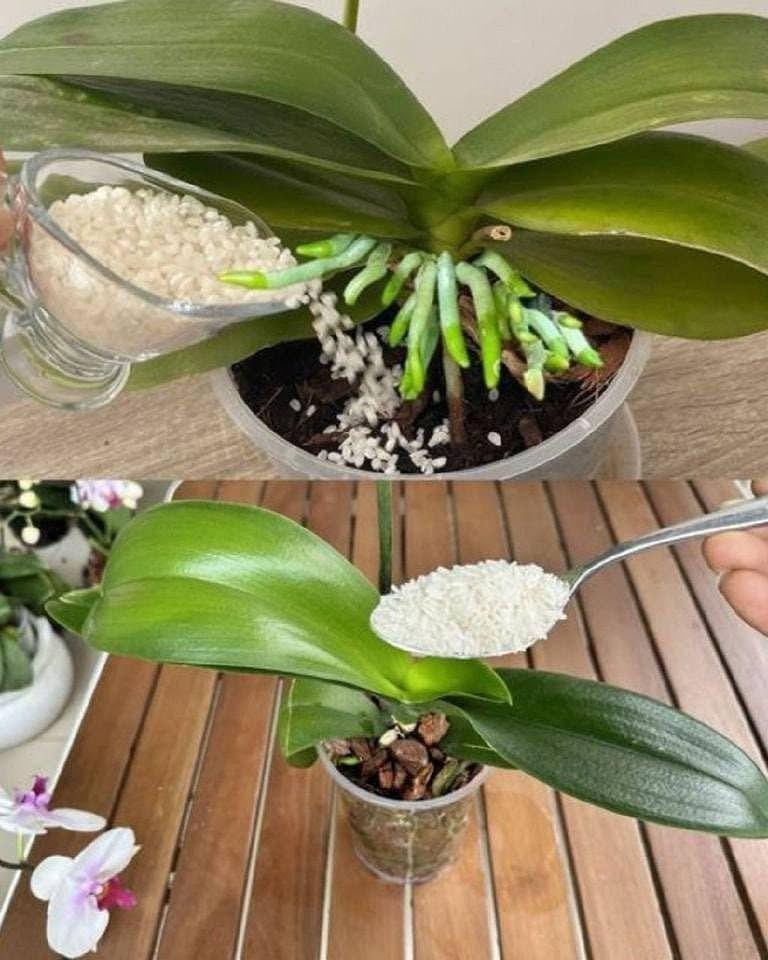
Weak or damaged roots reduce the plant's ability to support flowering.
Balanced Nutrition
Orchids benefit from fertilizers specifically formulated for their needs.
How to Feed Orchids Properly
Most orchid experts recommend using a balanced orchid fertilizer rather than relying solely on homemade remedies.
Look for fertilizers labeled specifically for orchids.
General guidelines include:
- Fertilize lightly during active growth
- Reduce feeding during dormancy
- Follow manufacturer instructions carefully
- Avoid over-fertilizing
Too much fertilizer can damage roots and hinder growth.
Signs Your Orchid Is Happy
Healthy orchids often display:
Bright Green Leaves
Leaves should be firm and free from major discoloration.
New Root Growth
Fresh roots indicate active development.
Strong Flower Spikes
Flower spikes emerge when conditions are favorable.
Regular Bloom Cycles
Many orchids bloom once or twice per year, depending on the variety.
Common Orchid Mistakes
Many orchid problems result from a few common care errors.
Overwatering
The leading cause of orchid death.
Roots sitting in water can quickly rot.
Poor Drainage
Orchids require specialized bark-based growing media rather than traditional potting soil.
Too Much Direct Sun
Strong sunlight can scorch leaves.
Neglecting Repotting
Orchid bark breaks down over time and should be replaced periodically.
Creating the Perfect Orchid Environment
For long-lasting success, focus on recreating the orchid's natural habitat.
Light
Place near an east-facing window or bright indirect light.
Humidity
Maintain humidity levels between 40% and 70%.
Airflow
Good circulation helps prevent fungal problems.
Watering
Allow roots to partially dry between waterings.