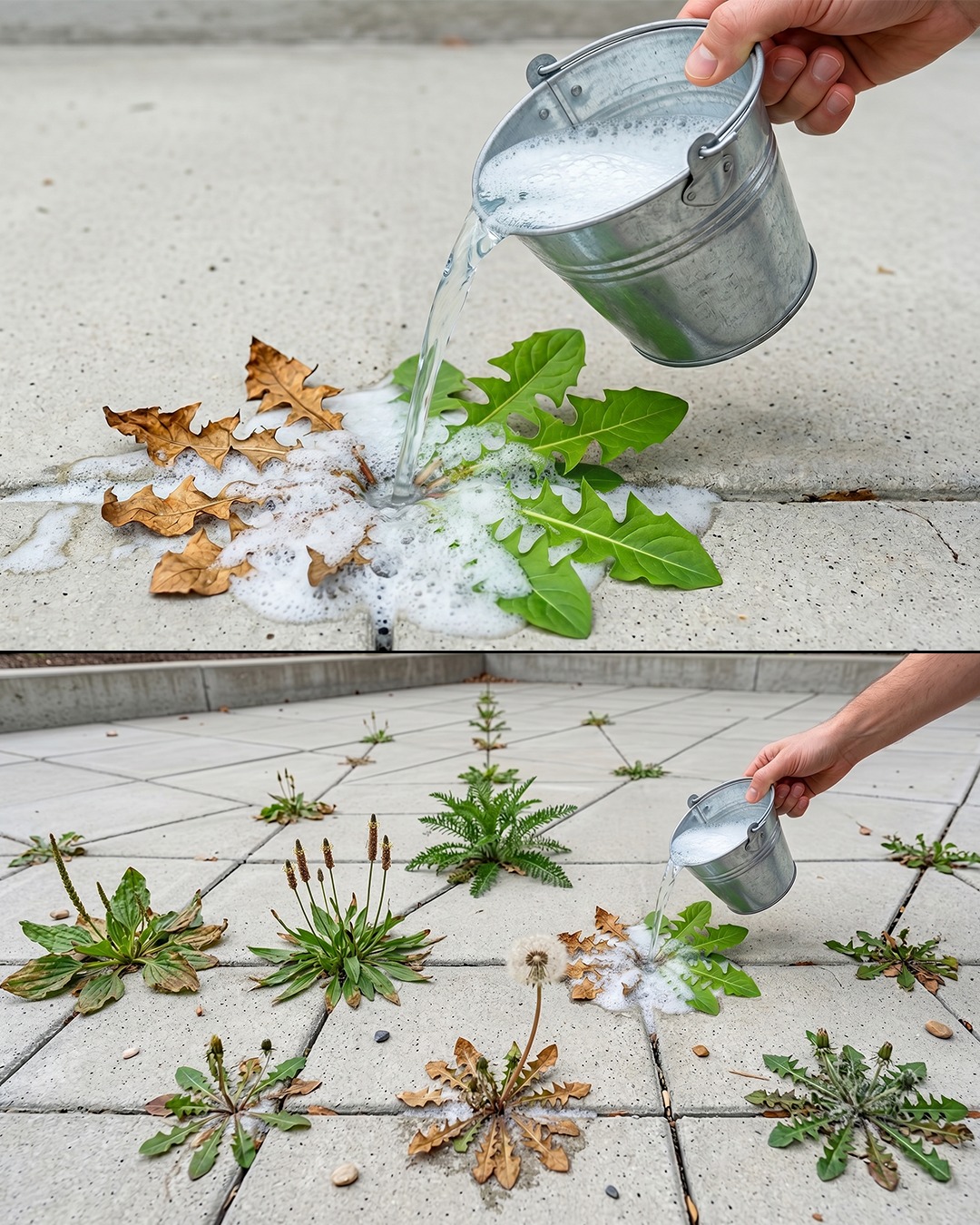
This spray is best for:
- Weeds between paving stones
- Driveway cracks
- Gravel paths
- Patio edges
- Sidewalk cracks
- Areas where you do not want plants to grow
Where You Should Avoid Using It
Do not use this mixture near:
- Vegetable gardens
- Flower beds
- Lawn edges
- Young trees
- Shrubs
- Soil where you plan to plant later
Because salt can remain in the soil, repeated use in planting areas can cause long-term damage.
What This Weed Killer Can and Cannot Do
This homemade solution works mostly as a contact weed killer. That means it affects the parts of the weed that it touches directly.
The leaves may begin to wilt within a few hours, and the weed may look dry after one or two days.
However, it may not completely kill deep roots. Some strong perennial weeds can grow back after a few weeks. In that case, you may need to repeat the treatment or remove the roots manually.
Tips for Better Results
For stronger results, spray the weeds when they are young and actively growing. Make sure the leaves are fully covered, but avoid soaking the soil too much.
Do not cut the weeds before spraying. The spray works better when there are enough leaves to absorb the mixture.
If weeds grow back, repeat the treatment after several days of dry weather.
Safety Tips
Wear gloves when preparing and spraying the mixture. Avoid touching your eyes or skin after handling vinegar, salt, or citric acid.
Keep the mixture away from children and pets until the sprayed area is dry. Also, do not store the mixture in bottles that could be confused with food or drinks.
Final Thoughts
A homemade weed spray made with vinegar, salt, citric acid, and dish soap can be a useful option for controlling weeds in patios, driveways, and paved areas. It is simple, affordable, and easy to prepare at home.
Still, it should be used carefully. Because salt and vinegar can affect soil and nearby plants, this method is best for non-growing areas where you want to reduce unwanted weeds naturally.