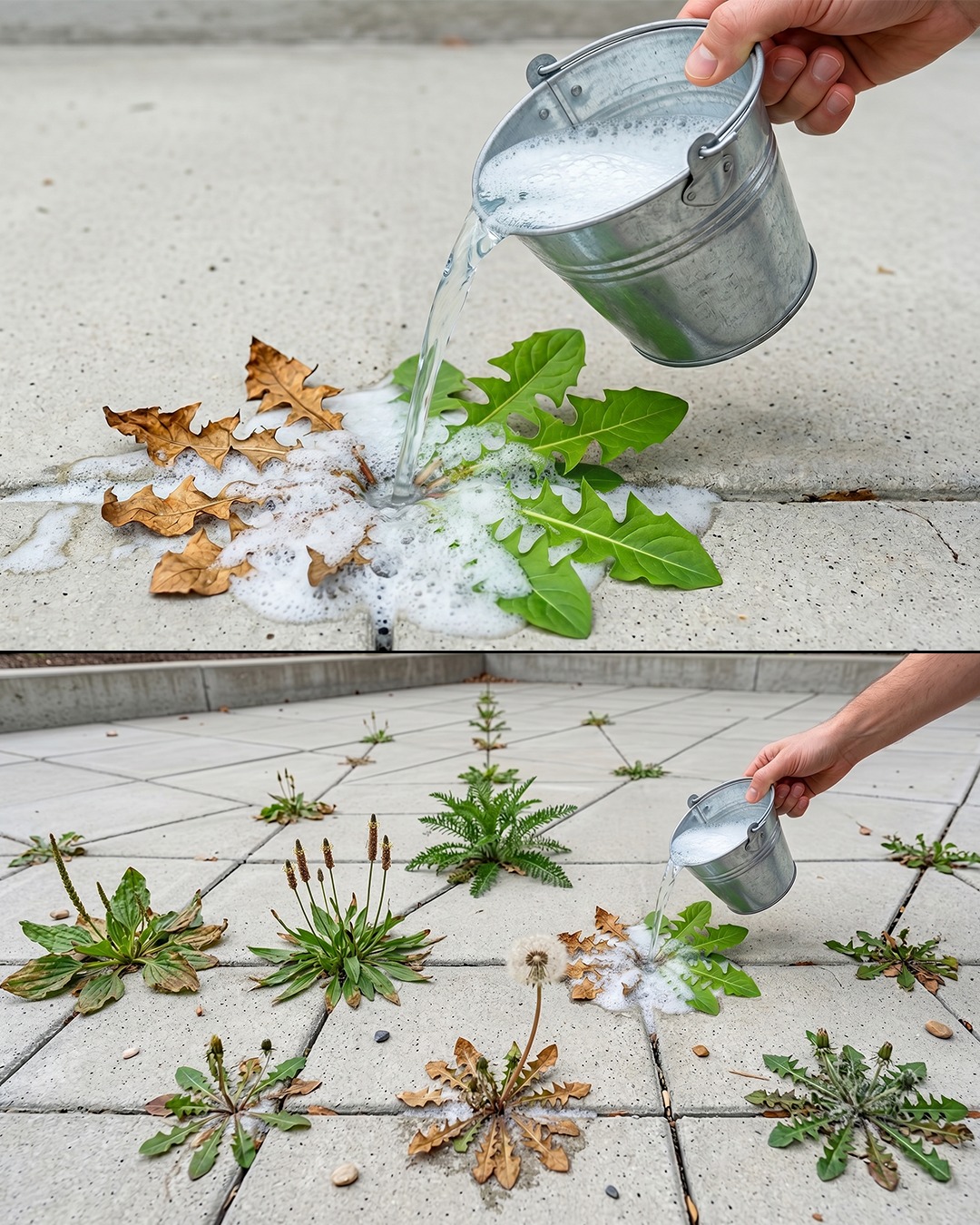
Weeds can quickly take over garden paths, patios, driveways, and the spaces between paving stones. While many commercial weed killers are available, some people prefer a simple homemade option using common household ingredients.
One popular natural weed-control mixture combines white vinegar, kitchen salt, citric acid, and a small amount of liquid dish soap. This mixture can help dry out unwanted weeds when used correctly, especially on young weeds growing in cracks, gravel areas, or paved spaces.
However, it is important to use it carefully. Natural does not always mean harmless, and ingredients like salt and vinegar can affect nearby plants and soil if applied incorrectly.
How This Homemade Weed Spray Works
This mixture works mainly by drying and damaging the visible parts of the weed. It is most effective when sprayed directly onto the leaves during warm, dry weather.
White Vinegar
White vinegar contains acetic acid, which can damage the surface of plant leaves. When sprayed directly onto weeds, it removes moisture from the leaf tissue and causes the plant to wilt.
For best results, vinegar should be applied on a sunny day, because heat helps speed up the drying effect.
Kitchen Salt
Salt is a strong ingredient in homemade weed control. It pulls water out of plant cells, making it harder for weeds to survive.
But salt must be used with caution. If too much salt enters the soil, it can make the area difficult for future plants to grow. For this reason, this spray is better suited for cracks in sidewalks, driveways, gravel paths, or places where you do not plan to grow flowers, vegetables, or grass.
Citric Acid