Its popularity comes largely from traditional use and cultural history rather than from modern medical approval.
The Soft Leaves That Made It Famous
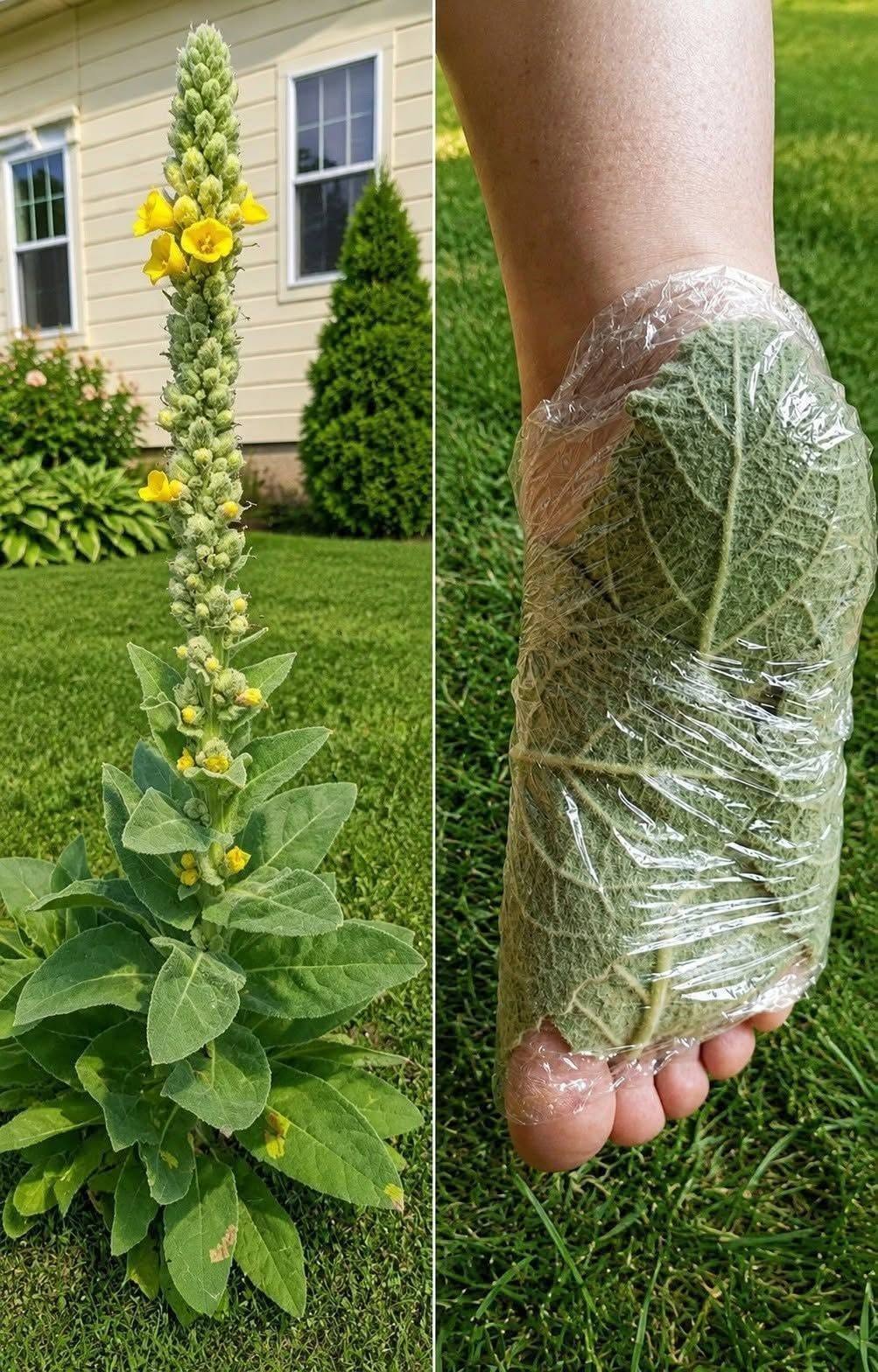
One of mullein's most unusual features is its leaves.
The leaves are covered with tiny hairs that create a soft, velvety texture. This characteristic has earned the plant several folk names throughout history.
Many people are surprised by how thick and woolly the leaves feel when touched.
Because of their size and softness, the leaves have been used in various practical ways throughout history beyond herbal preparations.
The Viral Foot-Wrap Trend
In recent years, social media users have popularized videos showing mullein leaves wrapped around the feet overnight using plastic wrap.
These posts often claim the plant can draw toxins out of the body while a person sleeps.
However, there is currently no scientific evidence demonstrating that mullein leaves remove toxins through the skin.
Health experts explain that the body naturally processes and removes waste through several organs, including:
- The liver
- The kidneys
- The digestive system
- The lungs
While mullein remains popular in traditional herbal culture, claims about overnight detoxification should be viewed cautiously.
Mullein Tea: One of the Most Common Preparations
One of the most traditional ways people use mullein is by preparing herbal tea from dried leaves or flowers.
Many herbal enthusiasts appreciate mullein tea because of its mild flavor and long history of use.
A typical preparation often involves:
- Drying the leaves or flowers.
- Steeping them in hot water.
- Straining carefully before drinking.
Because the tiny hairs on the leaves can be irritating, proper straining is generally recommended.
Interesting Historical Uses
Mullein has a surprisingly rich history.
Throughout different cultures, people have used it for purposes that extend beyond herbal remedies.
Historical records suggest it was sometimes used as:
- Lamp wicks
- Natural torches
- Decorative garden plants
- Traditional herbal ingredients
Its tall flower spikes made it especially noticeable in rural landscapes.
Why Gardeners Sometimes Let It Grow
Although some homeowners remove mullein as a weed, others intentionally leave it in place.
Reasons include:
- Its striking appearance
- Its ability to attract pollinators
- Its drought tolerance
- Its low maintenance requirements
The tall yellow flower stalks can become an eye-catching feature in naturalized gardens.